
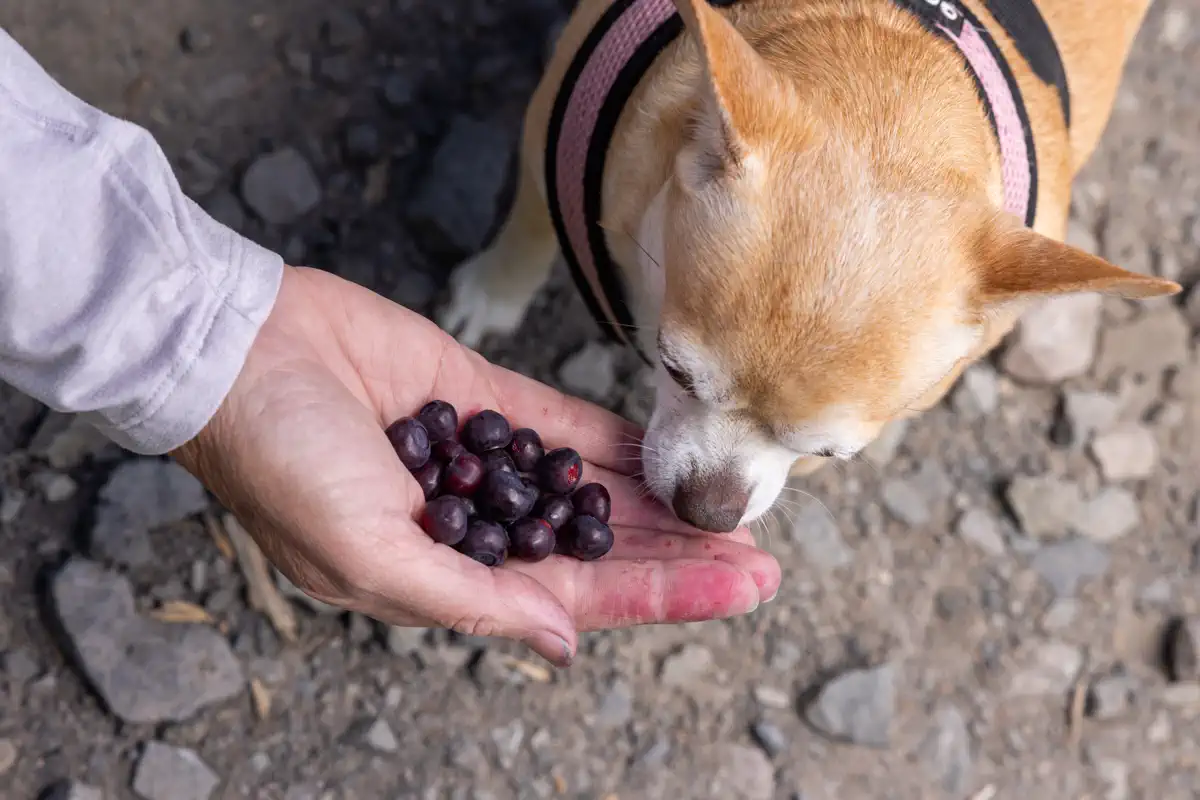
Blueberries come packed with vitamins and fibre. Your dog will probably love them as a snack or scattered on their usual food.
Loads of UK vets suggest swapping processed treats for blueberries, especially if your dog needs to watch their waistline.
Before you start tossing blueberries to your dog, it’s worth knowing how many are safe, what benefits they offer, and when you should ring your vet. Let’s make sure you feel confident feeding blueberries to your dog.
Key Takeaways
Yes, dogs can eat blueberries. Most dogs can enjoy them as a safe, healthy, low-calorie treat if you stick to sensible amounts.
- Blueberries are usually a safe, healthy snack for most dogs if you feed them right.
- They’re full of handy nutrients like fibre and vitamins that support your dog’s wellbeing.
- Knowing how many to give and spotting any warning signs keeps your dog happy and safe.
The Short Answer
Yes, you can give your dog blueberries. Vets across the UK say they’re a healthy, safe snack for most dogs.
Blueberries have plenty of fibre, vitamin C, and antioxidants. These nutrients support your dog’s immune system and might even help with brain health as your dog gets older.
So, are blueberries good for dogs? Generally, yes. They’re low in calories, so they’re a decent swap for fatty treats.
Here’s a rough guide for how many to give:
- Small dogs: 3 to 5 blueberries a day
- Medium dogs: 6 to 8 blueberries a day
- Large dogs: up to 10 blueberries a day
Treats like blueberries should make up less than 10% of your dog’s daily food. That way, your dog still gets all the nutrients they need.
Always wash blueberries before giving them to your dog. This gets rid of any dirt, pesticides, or wax on the skin.
If you’ve got a small dog or a puppy, cut the blueberries in half. That helps prevent choking.
Frozen blueberries work too. Many dogs love them as a cool treat on a warm day. Just thaw them out or give small pieces if your dog isn’t used to chewing frozen food.
Nutritional Benefits of Blueberries for Dogs
Blueberries get called a superfood for a reason. They’re loaded with vitamins, minerals, and plant compounds that can support your dog’s health as part of a balanced diet.
Here’s what blueberries offer:
- Antioxidants – help fight free radicals and lower oxidative stress in your dog’s body
- Vitamin C – supports the immune system
- Vitamin K – helps with blood clotting
- Fibre – keeps digestion ticking along
- Potassium and magnesium – support muscle and nerve function
- Calcium and phosphorus – help with bone health
Blueberries also have anthocyanins, which give them that deep blue colour. These are polyphenols, a group of plant chemicals linked to less inflammation.
The PDSA and Blue Cross both say blueberries make a healthy, low-calorie treat if you don’t go overboard. For a medium dog, about 5 to 10 berries is usually enough.
The fibre in blueberries helps keep your dog’s digestion regular. That’s handy if your dog sometimes has trouble with their bowels.
Blueberries are lower in sugar than most fruits. That makes them a gentler treat and less likely to spike your dog’s blood sugar.
How to Feed Blueberries to Your Dog Safely
Blueberries can be a lovely snack, but you need to think about portion size, how you serve them, and your dog’s health. Getting these bits right helps you avoid upset tummies and keeps blueberries a healthy addition.
How Many Blueberries Can a Dog Eat?
The right amount depends on your dog’s size. As a rule, keep blueberries to under 10% of your dog’s daily calories, alongside their complete and balanced dog food.
Here’s a quick guide:
| Dog Size | Daily Blueberry Amount |
|---|---|
| Small (up to 10kg) | 3-5 berries |
| Medium (10-25kg) | 6-8 berries |
| Large (25kg+) | 8-10 berries |
Blueberries have natural sugars, so too many can upset your dog’s stomach. Start with one or two berries the first time and see how your dog does.
If you’re using shop-bought blueberry dog treats, check the label for added sugar and fat. Some brands sneak in more than you’d expect.
How to Serve Blueberries to Dogs
Fresh blueberries are easiest and safest. Just wash them well to get rid of any pesticides, then offer them whole or mashed for smaller dogs.
Frozen blueberries make a brilliant cool treat, especially in summer. They’re just as good as fresh, but check for a choking hazard if you’ve got a small dog or a puppy, as frozen berries can be quite hard.
Try to avoid dried blueberries. They’re usually coated in sugar and have more calories, so it’s easy to overfeed without realising.
Skip blueberry yoghurt unless it’s plain, dog-safe, and has no added sugar or sweeteners. Many yoghurts contain xylitol, which is toxic for dogs.
You can mix a few berries into your dog’s regular dog food or use them as a training reward instead of shop-bought dog treats.
Wild blueberries are safe too and have similar nutrients to the ones you buy in shops.
Which Dogs Should Avoid Blueberries?
Most dogs can eat blueberries, but some need extra care.
- Diabetic dogs should only get blueberries in tiny amounts, if at all, because of the sugar. Chat with your vet before adding them to a diabetic dog’s meals.
- Senior dogs can still have blueberries, but it’s a good idea to mash or slice them first, especially if your dog has dodgy teeth.
- If your dog has a sensitive stomach or has had pancreatitis, introduce blueberries slowly and watch for any upset, like vomiting or diarrhoea.
- If your dog has a health problem or is on a special diet from a pet food provider, check with your vet before trying blueberries.
When to Call Your Vet
Most dogs handle blueberries just fine, but it’s smart to know what a bad reaction looks like and when to ring your vet. If your dog gets odd symptoms after eating blueberries, especially if they’ve eaten a lot, get in touch with your vet. Keep the RSPCA or a poisons helpline number handy just in case.
Signs of an Adverse Reaction
Look out for tummy upset, like vomiting, diarrhoea, or a swollen belly. This usually happens within a few hours if your dog eats too many blueberries.
Other signs to watch for:
- Lethargy or acting very tired
- Loss of appetite
- Excess drooling
- Straining to poo (this might happen if whole blueberries cause a blockage)
If your dog eats more than 60–80g of blueberries at once and starts showing these signs, call your vet for advice. Small dogs and puppies are more likely to react badly, so watch them closely.
If your dog is really unwell or keeps vomiting, don’t wait it out. Call your vet straight away, or contact the RSPCA if your practice isn’t available.
Frequently Asked Questions
Dog owners often have questions about giving blueberries to their dogs. Here are answers to the basics.
How many blueberries can I give my dog?
It depends on your dog’s size. Small dogs (under 10kg) can have about 3 to 5 blueberries a day. Medium dogs (10–25kg) can have 6-8. Large dogs (over 25kg) can have up to 10 blueberries with no trouble.
Blueberries should only be a small part of your dog’s daily food. Vets usually say treats, including fruit, should be less than 10% of total daily calories.
Can dogs eat raw blueberries?
Yes, raw blueberries are safe for dogs. Raw is actually best, as it keeps all the fibre and vitamins.
You don’t need to cook them or add anything. Just wash them well to get rid of dirt or pesticides.
Is it safe for dogs to eat blueberries every day?
Yes, most dogs can eat blueberries every day. They’re low in calories and sugar, so they make a good regular treat.
Stick to the right amount for your dog’s weight. Too many at once, even daily, can upset their stomach.
How often should I give my dog blueberries?
You can give blueberries every day or just a few times a week, whatever fits your dog’s routine. Many dog owners use them as training treats, giving a few throughout the day.
If your dog’s new to blueberries, start slow. Try one or two first and see how their tummy handles it.
Are blueberries safe for puppies?
Yes, puppies can eat blueberries. They’re soft and easy to chew, so they’re a good pick for young dogs still growing their teeth.
For tiny puppies, mash the blueberries first. This helps stop them choking, as puppies sometimes swallow food without chewing.
Which fruits should dogs avoid?
Not all fruits are safe for dogs. It’s handy to know which ones to skip.
– Grapes and raisins can be highly toxic. Even a small amount might cause kidney failure.
– Cherries aren’t safe either. The pits, stems, and leaves have cyanide, which can poison your dog.
– Avocados carry a risk too. They contain something called persin, and that can upset your dog’s stomach.
– Blueberry muffins? Best to avoid them. The added sugar, fat, and sometimes chocolate chips or xylitol make them a poor choice for dogs.
If you want to give your dog fruit, go for dog-safe options. Apples (without seeds), bananas, strawberries, and blueberries work well.
These fruits add a bit of variety. More importantly, they don’t carry the risks of toxic or overly processed foods.