
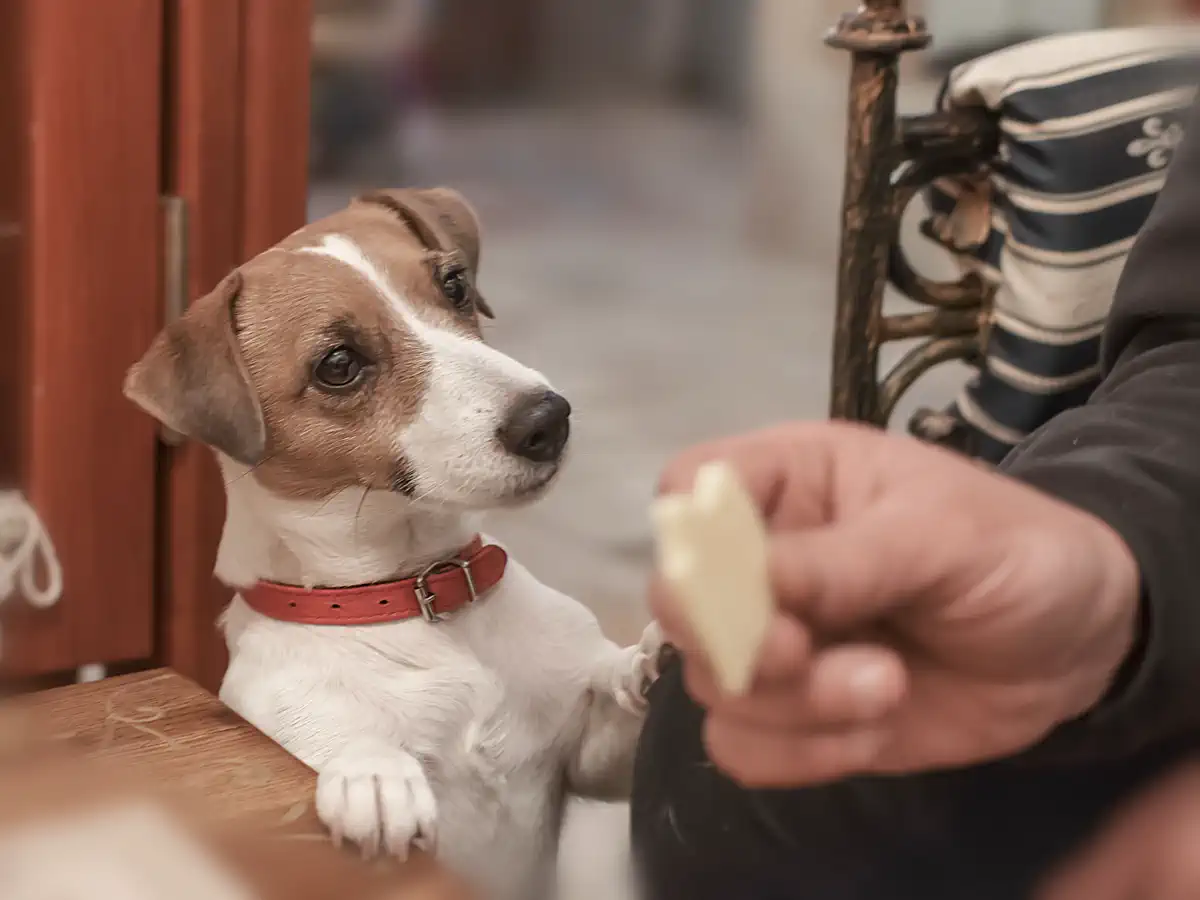
Cheese on its own isn’t harmful, but the wrong type or too much can cause problems.
Some cheese can actually be good for dogs if you feed it carefully.
It’s got protein, calcium, vitamin A, and B vitamins like B12, plus a bit of vitamin K and zinc.
Certain cheeses made with live cultures have probiotics, which might help your dog’s gut.
Still, not every dog handles cheese well, especially if they struggle with lactose.
This guide points out which cheeses are safest, how much to give based on your dog’s size, and signs that mean you should ring your vet.
You’ll also find quick answers to common questions UK dog owners ask about cheese.
Key Takeaways
Yes, dogs can eat cheese, but only in small amounts and not every day.
A few small cubes of plain, low-fat cheese – about 10 to 15 grams for an average-sized dog – make a sensible treat, not a regular part of your dog’s diet.
- Cheese can be a safe treat for dogs when given in small, controlled amounts.
- Sticking to low-fat, plain cheeses and following portion guidelines helps avoid digestive upset.
- Contact your vet if your dog shows signs of discomfort or an allergic reaction after eating cheese.
Safe Feeding Practices
Feeding cheese safely comes down to three things: portion size, fat content, and your dog’s own health.
Get these right, and you can share a tasty treat without upsetting your dog’s tummy or adding to their waistline.
How Much Cheese Can a Dog Eat?
Treats like cheese should make up no more than 10% of your dog’s daily calories.
For most dogs, this means just a small cube or two, no bigger than your fingertip.
- If you’ve got a small breed, stick to around 5-10 grams of cheese per day.
- Medium dogs can usually handle 10-20 grams, while larger breeds might be fine with up to 30 grams.
- Puppies need even less, since their tummies are still getting used to new foods.
Start with a tiny piece first and watch how your dog reacts.
If your dog’s overweight, keep cheese to a minimum – extra calories can make weight problems worse and put more strain on their joints.
How to Serve Cheese to Dogs
Pick plain, low-fat cheese with no added herbs, garlic, or onion, those can be harmful.
Cottage cheese and mozzarella work well, since they’re lower in fat and lactose than most other cheeses.
You’ve got a few ways to serve it:
- As a training treat – cut into small, pea-sized bits so you can reward good behaviour quickly.
- Mixed into food – grate a tiny bit over your dog’s meal for more flavour.
- On its own – as an occasional snack, given by hand.
Avoid high-salt cheeses – too much salt isn’t good for dogs.
Skip blue cheese and mouldy varieties, since they can contain roquefortine C, which might make dogs sick.
Which Dogs Should Avoid Cheese?
Some dogs just can’t handle dairy.
Lactose-intolerant dogs don’t have enough lactase, the enzyme needed to break down lactose, so they can get an upset stomach, wind, or diarrhoea after eating cheese.
If your dog’s had pancreatitis before, steer clear of cheese.
The fat can set off another flare-up, so check with your vet if you’re unsure.
Dogs with sensitive stomachs might struggle even with a little cheese.
Watch closely the first time you offer it, and stop right away if you see any signs of tummy trouble.
If your dog’s prone to obesity, keep cheese as a rare treat, if at all.
When to Call Your Vet
Most dogs handle a little cheese just fine, but sometimes things go wrong.
Knowing what to look out for helps you spot when it’s more than just mild tummy upset.
Signs of an Adverse Reaction
After your dog eats cheese, keep an eye on them for the next day.
Mild diarrhoea or a bit of wind isn’t unusual and usually settles down.
Call your vet right away if you see:
- Vomiting that doesn’t stop or happens more than once
- Severe or bloody diarrhoea
- Excessive thirst or lethargy, which could mean sodium ion poisoning if your dog’s eaten lots of salty cheese
- Swelling of the face or hives, which might be an allergic reaction
- Signs of pancreatitis – a hunched back, vomiting, and a painful tummy
If your dog’s eaten mouldy, garlic-flavoured, or a big chunk of blue cheese, ring your vet or the ASPCA Animal Poison Control Center for advice.
Better to check than wait.
Frequently Asked Questions
Here are quick answers to the things dog owners usually wonder about – portion sizes, safe cheeses, and what to avoid.
Which types of cheese are safest for dogs?
Plain, low-fat cheeses are your best bet.
– Cottage cheese and ricotta are gentle on the stomach and have less fat than most hard cheeses.
– Mozzarella’s another decent option, as it’s lower in lactose.
– Mild cheddar and small bits of Swiss cheese work as occasional treats.
Don’t pick anything with added herbs, garlic, or onion, even if the cheese itself is safe.
How much cheese can I give my dog as a treat?
– For a small dog, keep it to 5-10g at a time.
– Medium dogs can have up to 10-20g, and big breeds can manage 20-30g.
Think of cheese as an occasional reward, not a daily part of your dog’s meals. UK vets usually say treats should be no more than 10% of your dog’s food. If your dog’s overweight or has had pancreatitis, check with your vet before giving cheese.
Is it safe for dogs to eat cheddar cheese?
Yes, most dogs can have cheddar cheese in small amounts. Mild cheddar’s easier to digest than the stronger stuff, so it’s a better choice. A few little cubes, about the size of a fingernail, are plenty for a small dog. Keep portions small, as cheddar’s quite high in fat.
Can dogs have cheese every day?
Best not to give cheese daily. The fat adds up and can cause weight gain or upset tummies over time.
Save cheese for special moments, like training or as a rare treat. A couple of times a week, in small amounts, is safer than feeding it every day.
Which cheeses should dogs avoid?
Blue cheese, Roquefort, Stilton, and Gorgonzola are a big no. They contain roquefortine, which can cause vomiting, diarrhoea, and sometimes worse.
Brie and other soft, ripened cheeses can upset your dog’s stomach because of the mould and high fat.
Feta and soft goat cheese are often salty, so give them rarely, if ever.
Cream cheese and gouda aren’t toxic, but their fat content means they’re not good for everyday treats.
Parmesan is okay in tiny amounts, but the salt’s strong – less is definitely more.
Can dogs eat cheese on pizza or in cheese bread?
Honestly, it’s better not to give your dog pizza or cheese bread. These foods usually have garlic, onion, or loads of salt – none of which are good for dogs.
The bread and all those toppings just add extra fat and calories your dog could do without. If you’re keen to share a cheesy snack, try offering a tiny bit of plain mozzarella or mild cheddar instead.