
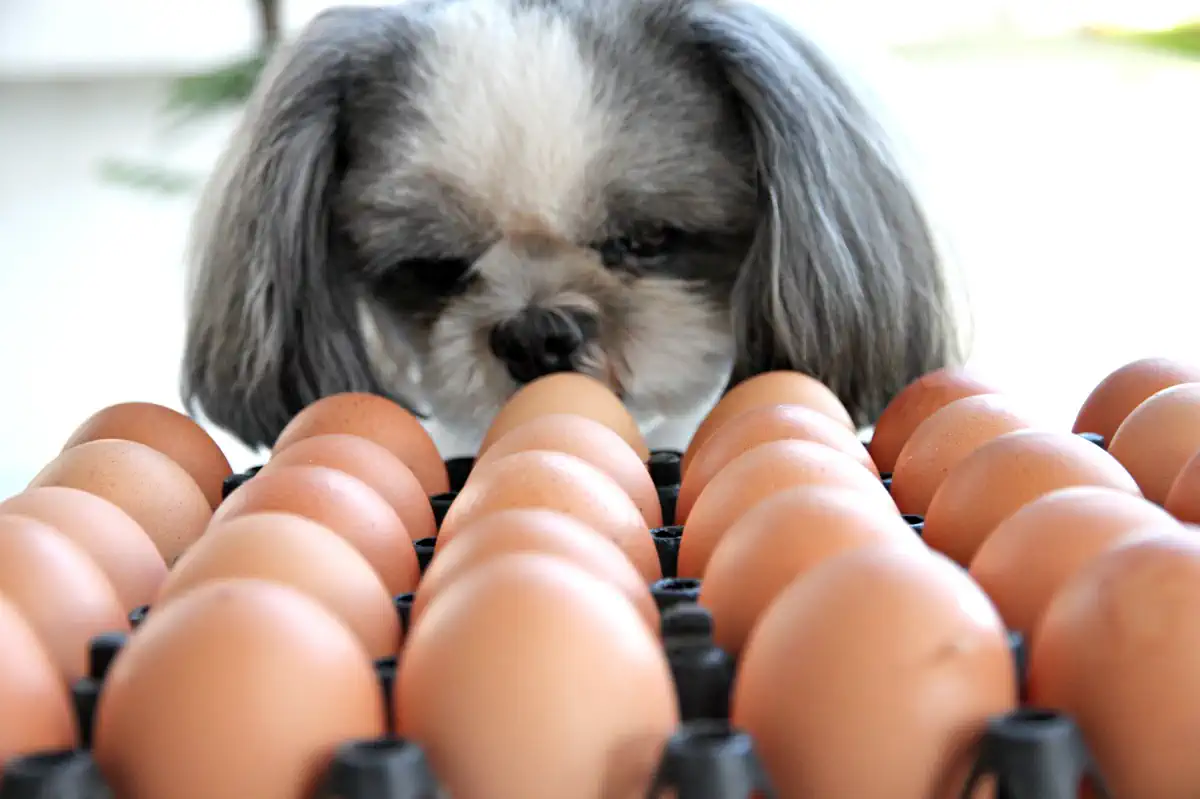
Before you pop an egg into your dog’s bowl, there are a few things to keep in mind. How you cook the egg, the amount you give, and how often you offer it all matter for your dog’s health.
Getting this balance means your dog enjoys the benefits without any unwanted problems.
This guide will walk you through what eggs offer, how much is safe, and how to spot if eggs don’t agree with your dog.
Key Takeaways
Yes, dogs can eat eggs. They’re a healthy addition to your dog’s diet when you feed them right. Eggs give your dog protein, vitamins, and healthy fats that can really help their overall health. Most dogs love the taste, and eggs are simple to prepare.
- Eggs are safe for most dogs and pack in handy nutrients like protein and vitamins.
- Cooking eggs well and sticking to sensible portions keeps your dog safe.
- Chat to your vet if your dog gets an upset tummy or any allergy signs after eating eggs.
The Short Answer
You can give your dog eggs! Eggs are one of the safest, most nutritious foods for dogs, as long as you cook them first.
Cooked eggs bring protein, vitamins, and minerals that help keep your dog’s coat shiny and their muscles strong. Vets often suggest eggs as a healthy extra on top of regular meals.
Here’s what you should remember:
- Always cook the eggs fully – boil or scramble them, but skip butter, oil, or salt
- Avoid raw eggs – they can carry salmonella and mess with your dog’s biotin absorption
- Skip the shell – it’s not needed and could be a choking hazard
- Keep portions small – for most dogs, one small or medium egg a couple of times a week is enough
Small breeds do best with about 15–20g of cooked egg per serving. Big dogs can usually handle a whole egg, no problem.
If your dog has kidney disease, pancreatitis, or an egg allergy, ask your vet before adding eggs to their meals.
For most healthy dogs, eggs are a cheap, easy way to boost their food with extra goodness. Just make sure you serve them plain and cooked every time.
Nutritional Benefits of Eggs for Dogs
Eggs give your dog high-quality protein. This helps build muscles and repair tissues, and it’s easy for dogs to digest.
You’ll also get a bunch of vitamins and minerals in just one egg. A typical large egg (around 50g) gives a nice mix of nutrients without piling on the calories.
Eggs provide:
- Vitamin A – good for eyesight and skin
- B vitamins (like riboflavin, folate, B12) – help your dog turn food into energy
- Vitamin B7 (biotin) – keeps coats glossy and skin healthy
- Selenium – helps the immune system
- Phosphorus – works with calcium for strong bones and teeth
- Iron – moves oxygen around the body
- Healthy fats – give energy and support the brain
The UK’s PDSA recommends a balanced diet, and eggs can fit in nicely as an extra alongside your dog’s usual food. One small or medium egg a few times a week is usually spot on for most adult dogs.
Eggs shouldn’t replace your dog’s main food. They work best as a tasty extra for extra nutrition.
If you’re unsure how eggs fit into your dog’s meals, your vet can give advice for your dog’s size, age, and health.
How to Feed Eggs to Your Dog Safely
Eggs are healthy for dogs, but only when cooked and served in the right amount. Stick to a few simple rules and you’ll avoid risks like salmonella and biotin problems.
How Much Egg Can a Dog Eat?
Your dog’s size matters when deciding how much egg to give. As a rough guide, small dogs can have about a quarter of an egg a day. Bigger dogs can usually manage a whole egg.
Eggs should only make up around 10% of your dog’s daily calories. One large egg has about 70 calories, so keep that in mind if your dog’s watching their weight.
Treat eggs as an extra, not a swap for their main food. Too many eggs, even cooked, can cause an upset tummy or weight gain over time.
If you’re trying eggs for the first time, start with a tiny bit and watch how your dog reacts.
How to Serve Eggs to Dogs
Always cook eggs fully before giving them to your dog. Hard-boiled or poached eggs are safest, as you don’t need oil, butter, salt, or pepper, your dog won’t miss them.
Don’t feed raw or undercooked eggs. Raw egg whites have avidin, which can block biotin and cause problems if fed often.
Here’s a quick prep guide:
- Best: hard-boiled, poached, or scrambled with no added fat
- Avoid: frying in oil or butter, or using salt, pepper, or other seasonings
- Skip: raw eggs, because of salmonella risk
Chop or mash the egg and mix it into your dog’s usual food, or serve it as a simple treat.
Which Dogs Should Avoid Eggs?
Some dogs shouldn’t eat eggs, or should only have small amounts. If your dog’s allergic to eggs, avoid them completely and ask your vet about safe options.
Dogs with pancreatitis or those needing a low-fat diet may struggle with egg yolks. Your vet might suggest just egg whites, or no eggs at all.
Overweight dogs should have eggs in smaller portions, as the calories can add up.
If you’re not sure if eggs suit your dog, check with your vet first – especially if your dog has health issues or a sensitive tummy.
When to Call Your Vet
Most dogs eat eggs with no problem. Still, it’s good to know what to watch for, and when to ring your vet.
Signs of an Adverse Reaction
If your dog tries eggs for the first time, keep an eye on them for 24 hours. Some dogs have food allergies, and eggs are a common one.
Watch for:
- Itchy skin or lots of scratching
- Red or sore ears
- Vomiting or diarrhoea
- Swelling round the face or mouth
- Hives or rashes
If your dog eats raw or undercooked egg, look for fever, tummy pain, or watery diarrhoea that doesn’t clear up in a day or two.
Call your vet straight away if your dog struggles to breathe, faces swelling that’s getting worse, or seems very weak or out of it. These signs could mean a serious allergic reaction and need urgent attention.
If symptoms are mild but don’t improve in a day or two, book a normal vet appointment.
Frequently Asked Questions
Here are quick answers to questions dog owners often ask about feeding eggs.
Can dogs eat raw eggs safely?
Raw eggs aren’t a good idea for dogs. They can carry salmonella, which could make your dog poorly.
Raw whites also have avidin, which blocks biotin – a vitamin your dog needs for healthy skin and fur.
Cooking eggs sorts out both problems. It’s an easy step that really matters for safety.
Are boiled eggs good for dogs?
Yes, boiled eggs are one of the safest ways to give your dog eggs. Boiling kills any bugs and keeps things simple.
A hard-boiled egg gives protein, vitamins, and healthy fats, but no extra oil or salt. For a small dog, half an egg is enough. Bigger dogs can have a whole egg. Let the egg cool before you give it to your dog. Chop it up, especially for small breeds.
Can I give my dog scrambled eggs?
Scrambled eggs are fine, as long as you cook them plain. Don’t add butter, oil, milk, salt, or seasoning – these can upset your dog’s tummy.
Use a non-stick pan so you don’t need fat. Let the eggs cool before serving, and cut them into small pieces for little dogs. Plain scrambled eggs are a nice change from boiled eggs. Most dogs love the soft texture.
How many eggs can a dog eat in a week?
Most UK vets say one to two eggs a week for an average-sized dog, about 15–20kg. Small dogs (under 10kg) should stick to half an egg two or three times a week.
Big dogs (over 25kg) can usually have up to three eggs a week. Eggs shouldn’t replace your dog’s usual meals, so think of them as a topper or treat.
If your dog’s overweight or has issues like pancreatitis, talk to your vet first. Eggs have fat, so portion size really matters for these dogs.
Can dogs eat eggshells?
Egg shells are safe for dogs and have calcium. Some owners crush the shell into powder and sprinkle it over food.
Don’t give big bits of shell, they can be sharp and a choking risk. Grinding the shell makes it much safer.
A quarter teaspoon of ground shell is enough for a small dog. Big dogs can have up to half a teaspoon.
Can dogs eat eggs every day?
Most dogs shouldn’t eat eggs every day. If you give eggs too often, you might add too many calories and fat to your dog’s meals.
That can make your dog put on weight after a while. It’s usually better to offer eggs just now and then, not every single day. Try giving eggs two or three times a week instead. That routine suits most dogs much better.
Thinking about feeding eggs more often? Have a chat with your vet first about the right amount for your dog’s size. That way, you keep things balanced and avoid any upset stomachs.